
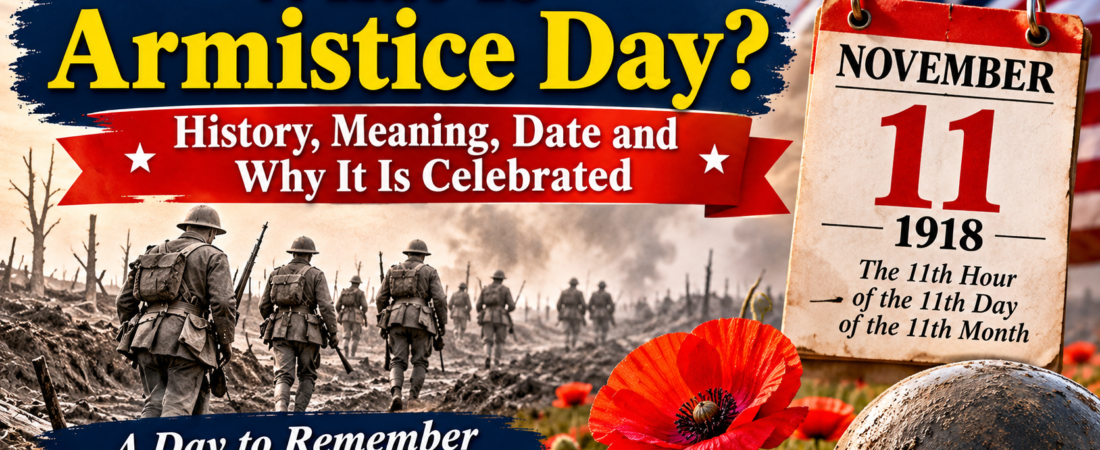
Armistice Day is an important historical observance connected to the end of major fighting in World War I. It is associated with November 11, 1918, when an agreement between the Allied nations and Germany stopped hostilities on the Western Front. The date became a symbol of remembrance, peace, and recognition for those who served during the war.
Many people search for Armistice Day because they want to understand its meaning, history, and connection to Veterans Day. In the United States, Armistice Day was the original name of the November 11 holiday before it was renamed Veterans Day in 1954.
Although the name changed, November 11 remains an important date in American military history. Other countries continue to observe the occasion under names such as Armistice Day or Remembrance Day.
This guide explains what Armistice Day means, why it is celebrated, what happened on November 11, 1918, and how the observance developed into the modern Veterans Day.
What Is Armistice Day?
Armistice Day is an observance that commemorates the armistice that stopped major fighting in World War I on November 11, 1918.
The agreement was reached between Germany and the Allied powers. It took effect at 11:00 a.m. on November 11, 1918, bringing an end to major hostilities on the Western Front.
The date is commonly remembered through the phrase:
The 11th hour of the 11th day of the 11th month.
Armistice Day originally honored the soldiers who served in World War I and remembered those who lost their lives during the conflict. It also represented hope for lasting peace after years of war.
In the United States, Armistice Day later became Veterans Day. The holiday now honors American military veterans who served in different wars and during peacetime.
When Is Armistice Day?
Armistice Day is associated with November 11 every year.
The date was selected because the armistice ending major World War I fighting took effect on November 11, 1918.
In the United States, November 11 is now officially observed as Veterans Day rather than Armistice Day. However, several countries continue to use Armistice Day or other remembrance-related names for their November 11 observances.
The date is not changed to a different calendar day when it falls on a weekend. The historical anniversary remains November 11.
What Happened on November 11, 1918?
November 11, 1918, marked a major turning point in World War I.
The war had continued for more than four years, causing widespread destruction, military casualties, and hardship across Europe and other parts of the world.
By late 1918, Germany was facing serious military and political difficulties. Negotiations between Germany and the Allied powers led to an armistice agreement.
The agreement was signed earlier that morning in a railway carriage near Compiègne, France. Its terms took effect at 11:00 a.m.
When the agreed time arrived, fighting on the Western Front stopped.
For millions of people, the news brought relief and hope after years of conflict. However, the effects of the war remained visible in communities that had lost soldiers, families, and homes.
The National Archives World War I collection provides historical records and material about the conflict and its aftermath.
Did World War I Officially End on November 11, 1918?
Not in the formal treaty sense.
The armistice stopped the fighting, but it was not the final peace treaty. The Treaty of Versailles was signed on June 28, 1919, establishing the formal peace terms between Germany and the Allied and Associated Powers.
This distinction is important because people often describe November 11, 1918, as the end of World War I. More precisely, it marked the end of major fighting on the Western Front through the armistice.
The formal peace settlement followed in 1919.
What Does the Word Armistice Mean?
An armistice is an agreement between opposing sides to stop fighting, either temporarily or under agreed conditions.
It does not necessarily mean that a war has officially ended. It can create an opportunity for negotiations, peace agreements, or other arrangements to resolve a conflict.
The 1918 armistice between Germany and the Allied powers stopped major fighting in World War I. The Treaty of Versailles followed several months later.
This is why the word Armistice Day is connected to the ceasefire rather than the signing of the final peace treaty.
Why Is Armistice Day Celebrated?
Armistice Day is observed to remember the end of major fighting in World War I, recognize those who served, and reflect on the importance of peace.
The conflict affected millions of military personnel and civilians. Many soldiers never returned home, while survivors and families experienced the lasting effects of the war.
The observance developed as a way to remember these sacrifices and recognize the hope that the end of the fighting would lead to a more peaceful world.
In the United States, the original observance focused mainly on World War I veterans. Over time, its purpose expanded to honor veterans from all American military conflicts.
History of Armistice Day in the United States
Armistice Day developed into an official American observance through several important historical events.
1918: The World War I Armistice
On November 11, 1918, the armistice between Germany and the Allied powers took effect at 11:00 a.m.
The date became associated with the end of major fighting in World War I and the hope for peace.
1919: President Woodrow Wilson Proclaims Armistice Day
One year after the armistice, President Woodrow Wilson recognized November 11, 1919, as the first Armistice Day commemoration in the United States.
The observance included public gatherings, parades, and a period of reflection. The original idea also included a brief suspension of business beginning at 11:00 a.m.
Wilson’s proclamation connected the day with remembrance, gratitude, and the hope for peace among nations.
1921: The Tomb of the Unknown Soldier
In 1921, an unidentified American service member who died during World War I was buried at Arlington National Cemetery.
The Tomb of the Unknown Soldier became an important national memorial honoring unidentified American service members who died in war.
November 11 was selected for the burial ceremony, connecting the memorial with the anniversary of the armistice.
1926: Congress Recognizes Armistice Day
On June 4, 1926, Congress adopted a resolution recognizing November 11 as an annual occasion for remembering the end of World War I and promoting peace.
This helped establish the observance across the country.
1938: Armistice Day Becomes a Federal Holiday
On May 13, 1938, Congress passed legislation making November 11 a legal federal holiday known as Armistice Day.
The holiday was dedicated to the cause of world peace and primarily honored veterans of World War I.
1954: Armistice Day Becomes Veterans Day
After World War II and the Korean War, millions of additional Americans had served in the military.
Veterans organizations and other supporters wanted November 11 to honor veterans of all American wars, not only those who served in World War I.
On June 1, 1954, President Dwight D. Eisenhower signed legislation changing the name of Armistice Day to Veterans Day.
The purpose of the holiday expanded to recognize American veterans from all generations.
The U.S. Department of Veterans Affairs history of Veterans Day provides the official historical timeline.
Why Did Armistice Day Become Veterans Day?
Armistice Day became Veterans Day because the United States wanted to recognize military veterans from more than one war.
When the holiday was established, its main focus was World War I. However, World War II and the Korean War created millions of additional American veterans who deserved recognition.
Changing the name made the holiday more inclusive of all generations of military service.
Raymond Weeks, a World War II veteran from Birmingham, Alabama, helped promote the idea of a national Veterans Day. In 1947, he organized an event honoring veterans of all wars.
The campaign gained support, and Congress eventually approved the name change.
President Eisenhower signed the legislation on June 1, 1954. Since then, November 11 has been known as Veterans Day in the United States.
For a fuller explanation of the modern holiday, read our article What Is Veterans Day? Meaning, Date, History and Facts.
Is Armistice Day Still Celebrated?
Yes. Armistice Day is still observed in several countries, although the name and traditions vary.
In the United States, the observance was renamed Veterans Day in 1954. November 11 remains the date, but the holiday now recognizes all American veterans.
Other countries continue to use the name Armistice Day or observe November 11 as Remembrance Day.
These observances commonly recognize people who served in military conflicts, remember those who died, and reflect on the importance of peace.
Armistice Day in the United Kingdom
The United Kingdom recognizes November 11 as Armistice Day.
The date commemorates the armistice that took effect in 1918. Remembrance events often include silence at 11:00 a.m. and ceremonies honoring military personnel who died in conflicts.
The United Kingdom also holds its main national Remembrance Sunday events on the Sunday closest to November 11.
Armistice Day in France
France observes November 11 as a national day of remembrance connected to the 1918 armistice.
Ceremonies take place at war memorials, with wreath-laying events and tributes to those who died in military service.
Armistice Day in Other Countries
Several countries recognize November 11 through different names and traditions.
For example, Canada and Australia observe Remembrance Day. The United States observes Veterans Day.
Although the names and specific customs differ, these commemorations share a connection to the end of major fighting in World War I.
How Is Armistice Day Observed?
Armistice Day traditions vary by country, but remembrance and reflection are common themes.
Common activities include:
- Holding ceremonies at war memorials.
- Observing a moment of silence at 11:00 a.m.
- Placing wreaths at memorials and monuments.
- Attending remembrance services.
- Honoring military personnel who died during war.
- Displaying national flags.
- Learning about World War I and its historical impact.
Some countries also use red poppies as a symbol of remembrance. The flower became associated with the battlefields of World War I and the memory of those who died.
These traditions help communities remember the people affected by war and recognize the importance of peace.
What Is the Difference Between Armistice Day and Veterans Day?
Armistice Day and Veterans Day share the same historical date in the United States, but their meanings are different.
Armistice Day originally commemorated the end of major fighting in World War I. It focused primarily on the veterans of that conflict and the hope for peace.
Veterans Day replaced Armistice Day in 1954. It now honors all people who have served honorably in the U.S. Armed Forces, whether during wartime or peacetime.
The date remained November 11, but the purpose expanded.
What Is the Difference Between Armistice Day and Memorial Day?
Armistice Day and Memorial Day have different historical origins and purposes.
Armistice Day commemorates the 1918 agreement that stopped major fighting in World War I. Its American successor is Veterans Day, which recognizes all who served honorably in the military.
Memorial Day is dedicated to remembering American military personnel who died while serving their country. It is observed on the last Monday in May.
In simple terms, Armistice Day is connected to the end of World War I fighting, while Memorial Day remembers those who lost their lives in military service.
You can read more in our comparison guide, Difference Between Armistice Day, Veterans Day, and Memorial Day.
Why Is November 11 Important?
November 11 holds historical importance because the 1918 armistice took effect at 11:00 a.m. on that date.
The timing created the well-known phrase about the 11th hour of the 11th day of the 11th month.
The date became an annual reminder of the end of major World War I fighting and the sacrifices made by military personnel.
It later developed into Veterans Day in the United States and remains an important date for remembrance in several other countries.
Frequently Asked Questions About Armistice Day
What Is Armistice Day in Simple Words?
Armistice Day remembers the agreement that stopped major fighting in World War I on November 11, 1918. It later became Veterans Day in the United States.
When Was the First Armistice Day?
The first official American Armistice Day commemoration took place on November 11, 1919. President Woodrow Wilson proclaimed the observance one year after the 1918 armistice.
Why Is Armistice Day on November 11?
Armistice Day is observed on November 11 because the agreement between Germany and the Allied powers took effect at 11:00 a.m. on November 11, 1918.
What Time Did the World War I Armistice Begin?
The 1918 armistice took effect at 11:00 a.m. on November 11. This is the origin of the phrase “the 11th hour of the 11th day of the 11th month.”
Did the Armistice End World War I?
The armistice stopped major fighting on the Western Front, but it did not serve as the final peace treaty. The Treaty of Versailles was signed on June 28, 1919.
Who Started Armistice Day in America?
President Woodrow Wilson proclaimed November 11, 1919, as the first American Armistice Day commemoration. Congress later recognized the observance in 1926 and made it a federal holiday in 1938.
When Did Armistice Day Become Veterans Day?
Armistice Day officially became Veterans Day on June 1, 1954, when President Dwight D. Eisenhower signed the legislation changing the holiday’s name.
Is Armistice Day a Federal Holiday in the United States?
No. Armistice Day is no longer the official name of a U.S. federal holiday. It was replaced by Veterans Day in 1954, which is observed every November 11.
Is Armistice Day the Same as Remembrance Day?
They are closely related observances associated with November 11 and the end of major World War I fighting. However, the names and traditions differ by country. For example, Canada and Australia observe Remembrance Day, while the United States observes Veterans Day.
Why Do People Observe a Moment of Silence at 11:00 a.m.?
The moment of silence recalls the time the 1918 armistice took effect. It gives people an opportunity to remember those affected by war and reflect on the importance of peace.
Final Thoughts
Armistice Day is an important part of World War I history and the development of modern military remembrance traditions.
The observance began after the armistice stopped major fighting on November 11, 1918. President Woodrow Wilson proclaimed the first American Armistice Day in 1919, and Congress made it a federal holiday in 1938.
In 1954, the United States changed the name to Veterans Day so the holiday could recognize veterans from all American wars and generations.
Although the name changed in the United States, November 11 remains a meaningful date around the world. It reminds people of the end of major World War I fighting, the sacrifices made by military personnel, and the importance of working toward peace.