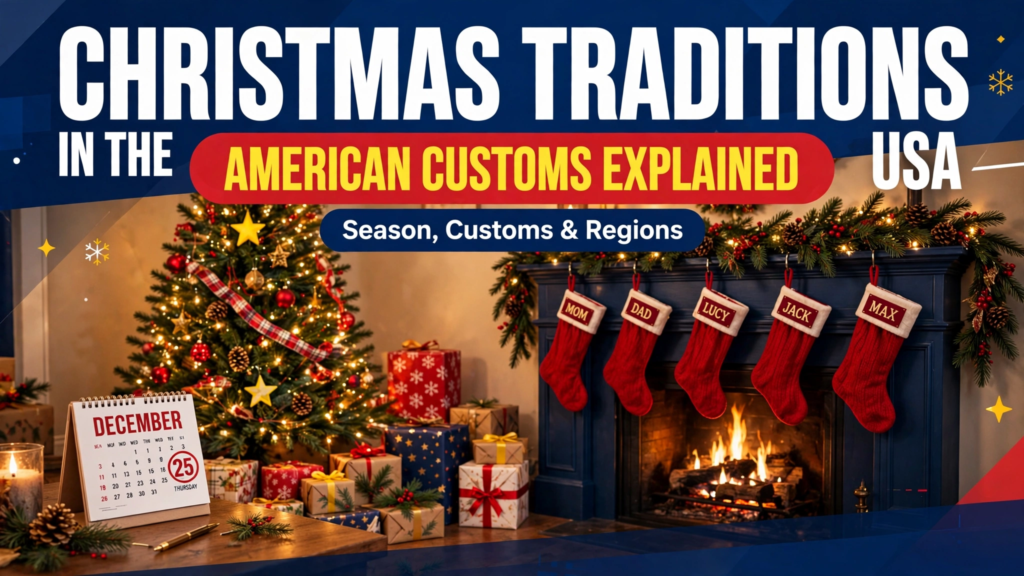
Christmas traditions in the USA run for more than a month, from Thanksgiving in late November to New Year’s Day. The nationwide core — decorating a tree, hanging stockings, exchanging gifts, Santa Claus, Christmas dinner and church services for many families — sits alongside customs invented or popularized in America itself, like tracking Santa with NORAD, Elf on the Shelf and ugly sweater parties, and regional traditions that change from state to state. This guide walks through the season, the nationwide customs and where each came from, and the regional traditions worth knowing.
The American Christmas Season: Thanksgiving to New Year
Unlike countries where Christmas is mainly one or two days, the US season is long. It effectively opens on Thanksgiving Day (the fourth Thursday in November), followed by Black Friday shopping, tree-lighting ceremonies in early December, school concerts and office parties through the month, Christmas Eve on December 24, Christmas Day on December 25, and a quieter week until New Year’s Eve. Two national symbols mark the season: the National Christmas Tree near the White House, lit each year since 1923 when President Calvin Coolidge lit the first, and the Capitol Christmas Tree on the west lawn of the US Capitol, a tradition since 1964 and provided by the US Forest Service since 1970.
Nationwide Traditions and Where They Came From
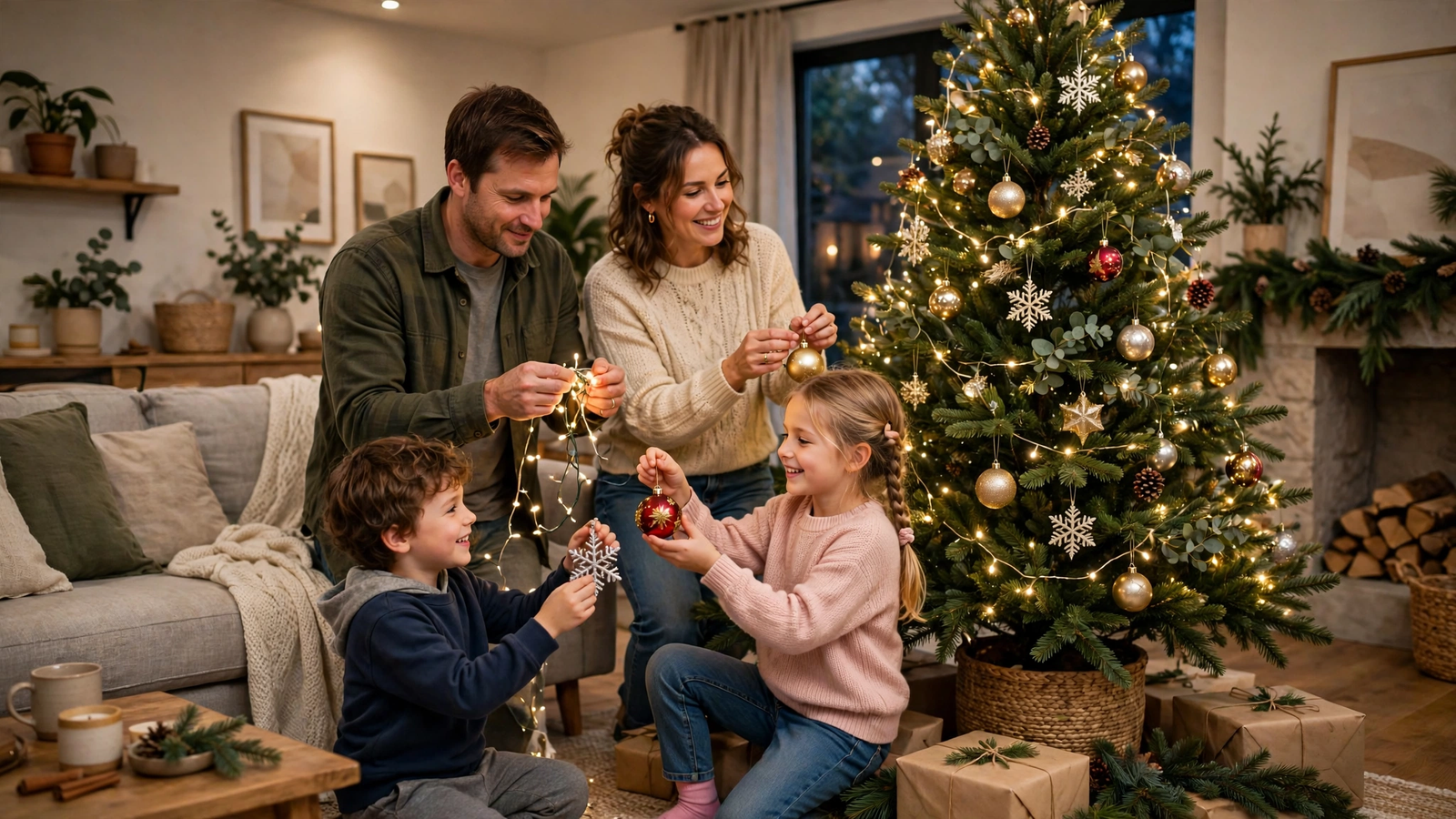
Most American customs were brought by immigrants and then given an American shape. The table below gives the origin of each in one line — and flags the ones that are genuine US inventions.
You may also like
| Tradition | Where it came from |
|---|---|
| Christmas tree | German custom, spread through Britain and America in the 1800s. Mark Carr opened the first US Christmas tree lot in 1851; Edward H. Johnson strung the first electric tree lights in New York in 1882. |
| Stockings | Linked to Saint Nicholas legends of gifts dropped down a chimney; hung by the fireplace for Santa to fill with small gifts and treats. |
| Santa Claus | Dutch Sinterklaas, reshaped in America by “A Visit from St. Nicholas” (1823) and Thomas Nast’s illustrations from 1863. Department-store Santas date to 1890. |
| Gifts on Christmas morning | The US norm is opening presents on December 25 morning — unlike much of Europe, where gifts are exchanged on Christmas Eve. |
| Christmas dinner | Turkey, ham or roast beef with side dishes and desserts such as pumpkin or pecan pie; menus vary by family and region. |
| Christmas cards | British invention, adopted widely in the US; families mail cards through December, often with a family photo or letter. |
| Church services | About half of Americans plan to attend church on Christmas Eve or Christmas Day, according to Pew research. |
| NORAD Tracks Santa (US invention) | Began December 24, 1955, when a child misdialed a Sears newspaper ad and reached the CONAD operations center in Colorado Springs. Colonel Harry Shoup answered, and NORAD took over the tracking in 1958. |
| Elf on the Shelf (US invention) | A 2005 American book-and-doll tradition: a scout elf “watches” children in December and is moved to a new spot each night. |
| Ugly sweater parties (popularized in North America) | Deliberately garish Christmas sweaters worn for parties and contests; the modern party form spread from Vancouver in 2001. |
| Christmas pickle ornament | A pickle-shaped ornament hidden on the tree; the finder gets a small prize. Marketed in the US as a “German tradition,” though it is largely an American custom. |
| Operation Santa (US) | The US Postal Service has answered children’s letters to Santa since 1912, now matching letters with volunteer gift-givers. |
Gift exchanges at work and among friends often use Secret Santa (one anonymous gift-giver per person) or White Elephant (a game of stealing and swapping wrapped gifts). Christmas Eve itself is a normal working day in the US — not a federal holiday — though many employers close at noon or early, and families gather for a meal, a church service, or a drive to see Christmas lights.
Regional Traditions Across the USA
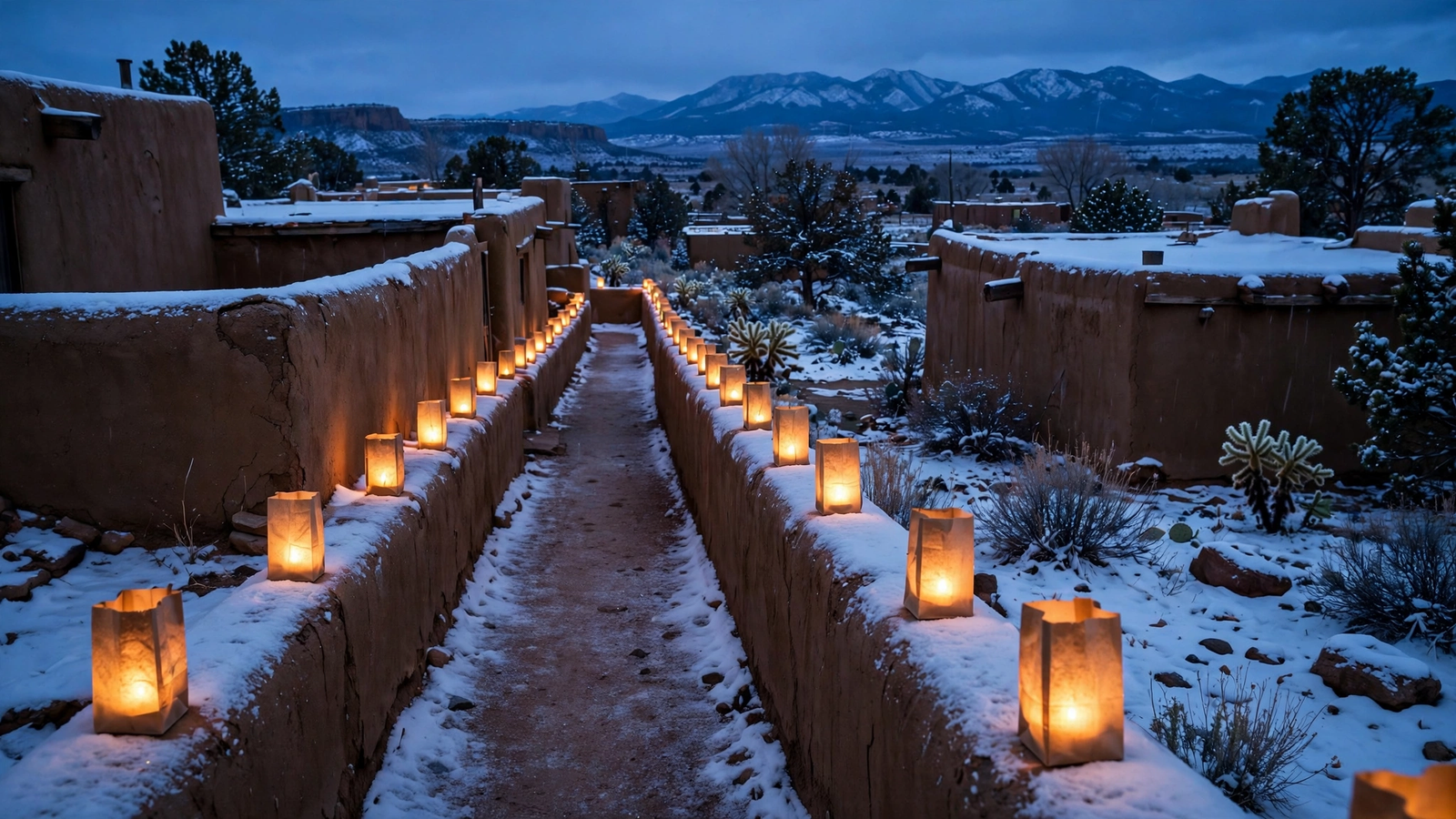
Regional customs reflect the cultures that settled each area:
| Region | Tradition |
|---|---|
| Louisiana | Christmas Eve bonfires built on the Mississippi River levees to light the way for Papa Noël, the Cajun Santa. |
| New Mexico | Farolitos (also called luminarias) — candles in paper bags lining walkways, walls and rooftops, especially in Santa Fe and Albuquerque. |
| Southwest | Las Posadas, a nine-night reenactment of Mary and Joseph seeking lodging, with processions, songs and food. |
| Italian-American communities | The Feast of the Seven Fishes on Christmas Eve — a meatless meal of seafood dishes, rooted in the Catholic vigil fast. |
| Hawaii | “Mele Kalikimaka” greetings, Honolulu City Lights displays (since 1985), and Santa arriving by outrigger canoe in some celebrations. |
| Arizona | Chandler’s tumbleweed Christmas tree, built from tumbleweeds since 1957. |
| Midwest | Christkindlmarkets (German-style Christmas markets) in cities such as Chicago, and Scandinavian foods such as lutefisk in Minnesota and Wisconsin. |
| Puerto Rico | Parrandas — groups of friends going house to house at night singing aguinaldos (carols) and being welcomed in for food and drink. |
If You Are Visiting or New to the US
A few practical points help. Christmas Day is a federal holiday: banks, post offices, schools and government offices close, and many stores and restaurants close or keep short hours — check our guide to what is open and closed on Christmas before planning the day. “Merry Christmas” is the common greeting, with “Happy Holidays” also widely used. Houses are often decorated with outdoor lights through December, and many neighborhoods run light displays you can drive or walk through. People who do not celebrate Christmas often treat December 25 as a quiet day off — some traditions, such as a movie outing, have grown up around the day being a general holiday.
FAQs
What are the most popular Christmas traditions in the USA?
Decorating a tree, hanging stockings, exchanging gifts on Christmas morning, Santa Claus for children, Christmas dinner, sending cards, and — for about half of Americans, according to Pew — attending a church service on Christmas Eve or Day.
Do Americans open presents on Christmas Eve or Christmas Day?
Mostly on Christmas morning, December 25. Some families open one gift on Christmas Eve, but the main exchange is on the morning of the 25th — the opposite of much of Europe.
When does the Christmas season start in the United States?
Informally at Thanksgiving in late November. Decorations, tree lightings and shopping build through December, with the season ending around New Year’s Day.
What is NORAD Tracks Santa and when did it start?
It is the North American Aerospace Defense Command’s Santa-tracking program for children. It began on December 24, 1955, after a child misdialed a Sears ad number and reached the CONAD operations center; NORAD took over in 1958.
What do people who don’t celebrate Christmas do on December 25?
December 25 is a general federal holiday, so many simply enjoy a day off. Some go to the movies or eat out where places are open; others volunteer or spend the day with friends.
What are some regional Christmas traditions in the US?
Louisiana levee bonfires, New Mexico farolitos, Las Posadas in the Southwest, the Feast of the Seven Fishes in Italian-American communities, and Hawaii’s Mele Kalikimaka celebrations are among the best known.
American Christmas is a blend: European customs reshaped over two centuries, a handful of genuine US inventions, and regional traditions that keep local cultures visible. More holiday guides — dates, history and open-and-closed hours — are on the MemorialDayUSA homepage.