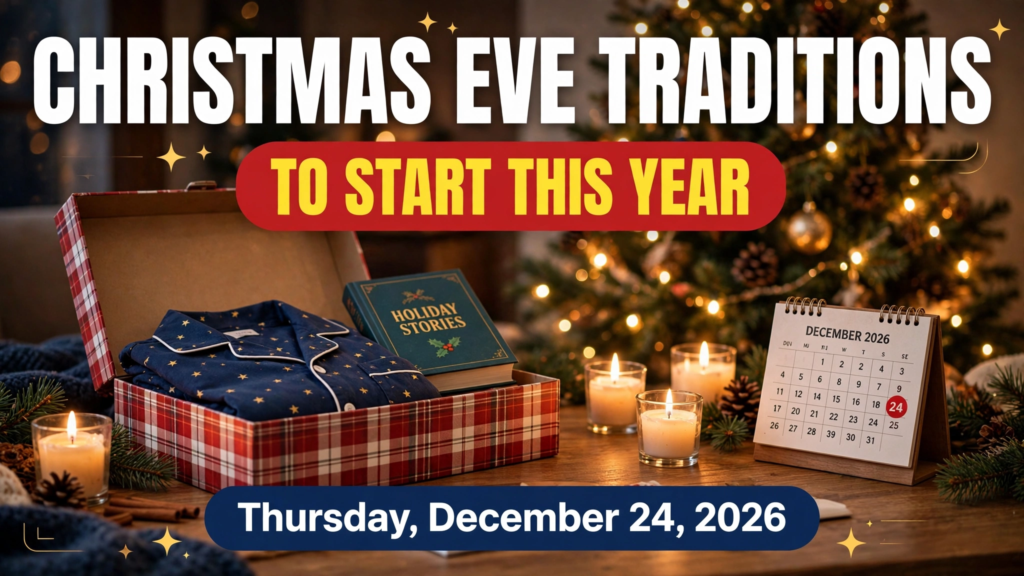
Christmas Eve traditions work best when they are small, repeatable and tied to a fixed moment — a book read every year, a meal that always looks the same, a walk at the same time. Christmas Eve 2026 is Thursday, December 24, 2026, and it is the vigil of Christmas: in church tradition the feast begins at sunset on the 24th, which is why evening services and Midnight Mass belong to the Eve. This guide is not a list of fifty ideas. It helps you pick one tradition to start this year — sorted by who it is for, with the cost and time each one takes — plus the world customs behind the best-known Eve traditions.
How to Choose a Tradition That Lasts
Traditions survive when they pass three tests: they cost little or nothing, they take under an hour, and they happen at the same point every year (after dinner, before bed, at sunset). A tradition that needs perfect weather, a big budget or a free afternoon will quietly die in a busy year. Pick one from the sections below, do it this December 24, and repeat it next year — repetition is what turns an activity into a tradition.
Traditions for Families With Kids
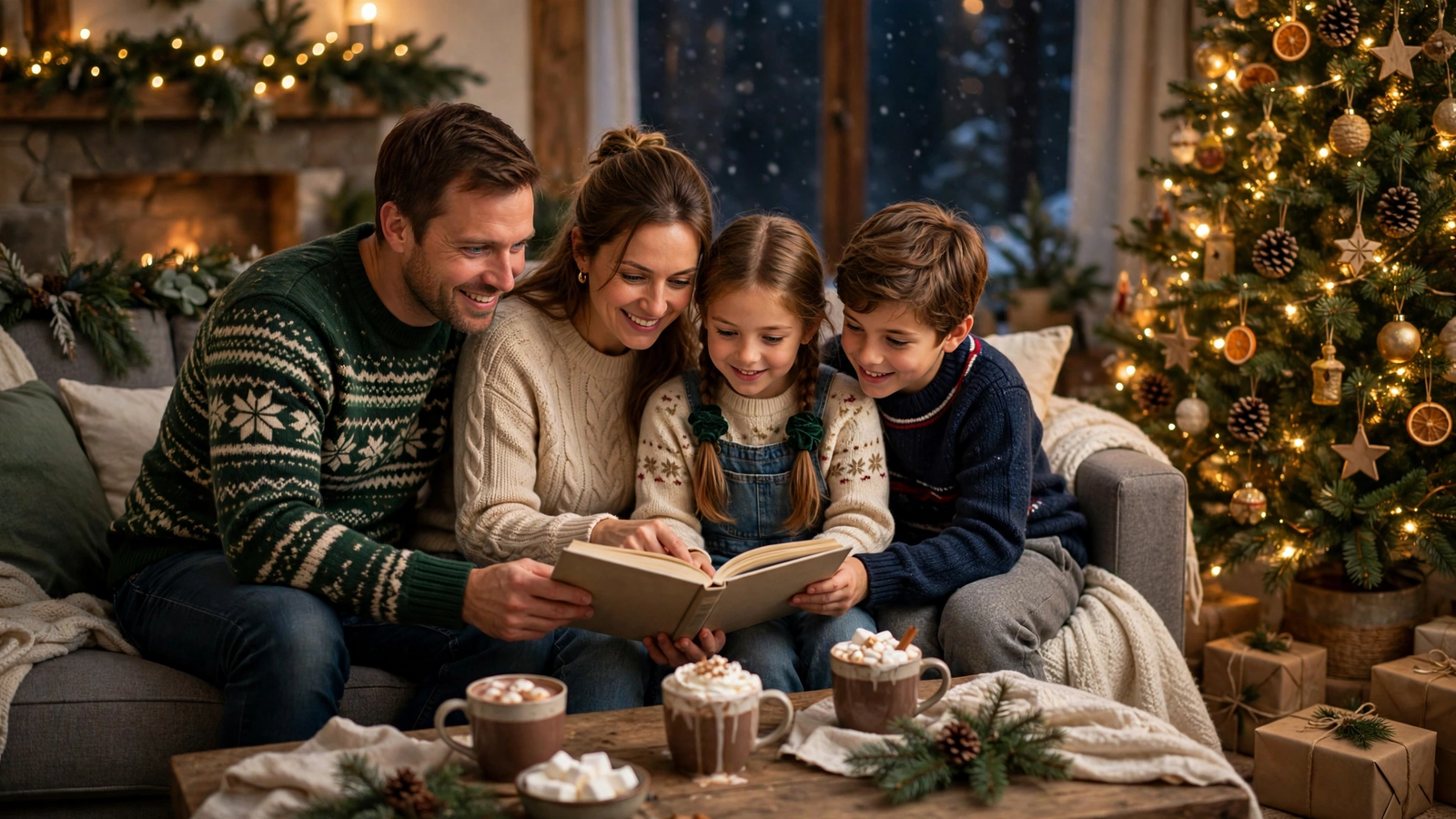
- Read “A Visit from St. Nicholas” aloud. Published in 1823 and attributed to Clement Clarke Moore, it is the poem that fixed Santa’s reindeer names. Cost: free (library copy). Time: 10 minutes, before bed.
- A Christmas Eve box. A box opened on the Eve with new pajamas, a book, a small treat and a film or game for the evening. Cost: low to moderate — it works with one book and pajamas. Time: 5 minutes to open, the evening to enjoy.
- Cookies and milk for Santa, carrots for the reindeer. Leave them out before bed; a thank-you note in the morning delights children. Cost: a few dollars. Time: 15 minutes.
- Wildlife-safe reindeer food. Sprinkle oats, seeds and dried fruit on the lawn to “guide” the reindeer. Use only food items — never glitter, which harms wildlife. Cost: free from the pantry. Time: 5 minutes.
- Track Santa with NORAD. NORAD has tracked Santa every December 24 since 1955, after a child’s misdialed phone call reached the operations center. Checking the tracker together before bed is free and takes minutes.
Traditions for Couples and Adults
- A book-flood evening. Borrowed from Iceland’s Jólabókaflóð: exchange books on Christmas Eve and spend the evening reading. Cost: one book each. Time: the evening.
- One special dish, every year. A fondue, a seafood course, or a dessert you only make on December 24. Repetition is the point — the dish becomes “our Christmas Eve dish.”
- A lights walk. Walk or drive a fixed route to see the neighborhood’s Christmas lights, with hot drinks. Cost: free. Time: 30–60 minutes after dinner.
- Open one gift each. Many couples exchange one present on the Eve and save the rest for the morning. In German-speaking countries, Heiligabend gift-giving on the evening of the 24th is the main event.
Traditions for Grandparents and Mixed Ages
- A story round. Each person tells one memory of a past Christmas. Works across ages, costs nothing, and records family history children would otherwise never hear.
- A shared wafer or toast. In Polish Wigilia tradition, family members share the opłatek wafer and exchange wishes before the meal. Any family can adapt the gesture: a toast where each person wishes the others one specific good thing for the year ahead.
- An early, calm meal. A late-afternoon Eve meal suits young children and older relatives better than a late night — and leaves the evening free for a service or a film.
Traditions If You Are Spending Christmas Eve Alone
A solo Eve tradition works the same way: one fixed, pleasant anchor. Cook the meal you actually want, light candles, put on a favorite film or album, and schedule one call with family or a friend rather than leaving the evening open-ended. A book exchange with yourself — a new book bought for the night, in the Jólabókaflóð spirit — is a tradition many solo celebrators keep.
Christmas Eve Traditions Around the World
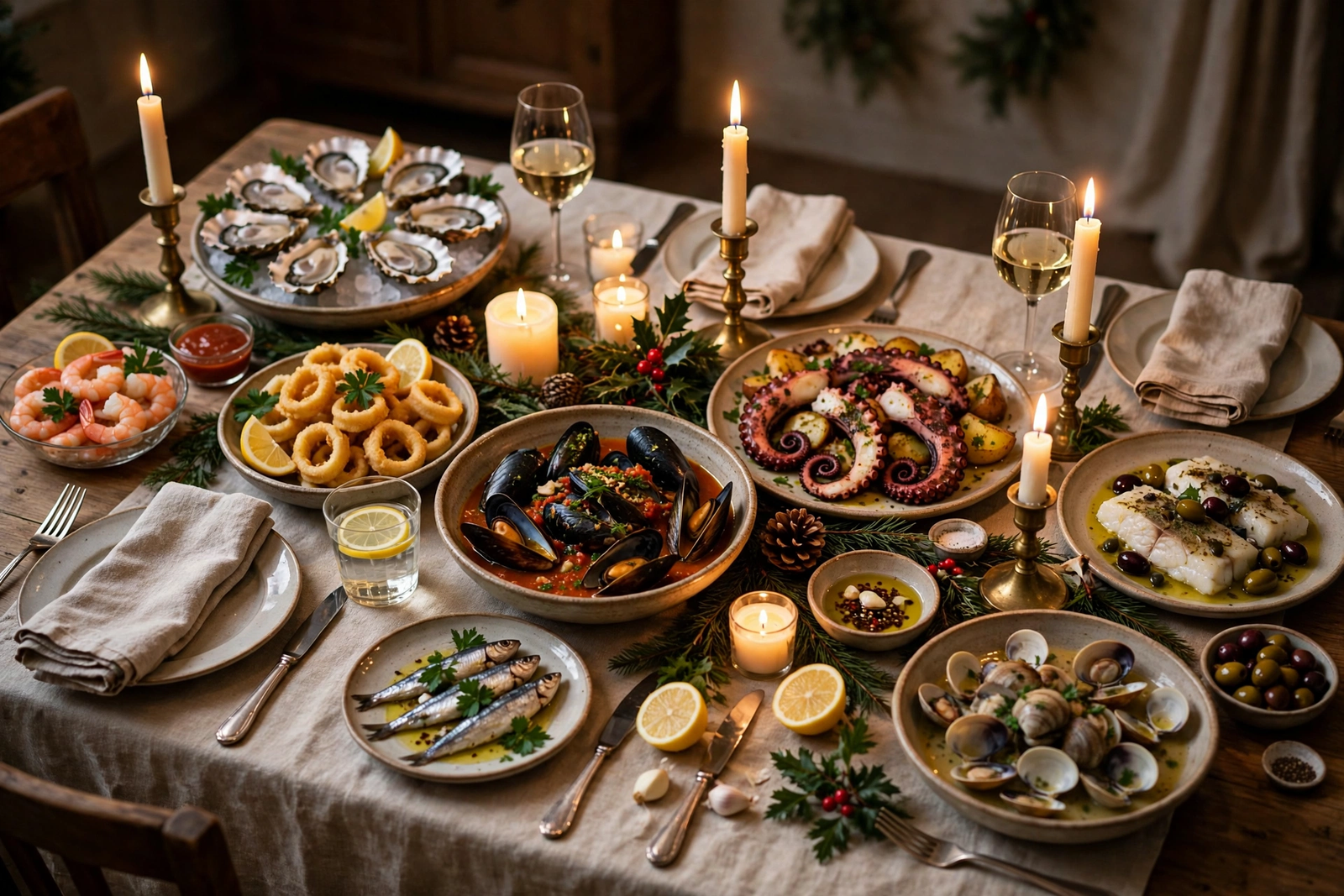
Several customs Americans meet at friends’ tables come from the old vigil fast — the practice of eating no meat on the eve of a major feast:
- Polish Wigilia: a meatless supper of twelve dishes (one for each Apostle), an empty place set for an unexpected guest, and the meal begins when the first star appears. The family shares the opłatek wafer and exchanges wishes first.
- Feast of the Seven Fishes: Italian-American families serve seven (sometimes nine or eleven) seafood dishes on Christmas Eve, descending from Catholic abstinence from meat on the vigil. The number seven is traditionally linked to the seven sacraments. It is more common in the US Italian diaspora today than in modern Italy.
- German Bescherung: gifts are exchanged on the evening of December 24, often after dinner or church, brought by the Christkind in many regions.
- Icelandic Jólabókaflóð: the “Christmas book flood” — books are the classic Christmas Eve gift, and the evening is spent reading.
- Midnight Mass: formalized by Pope Sixtus III (432–440) in Rome, modeled on the Bethlehem vigil. Many churches today hold earlier evening services as well as midnight ones.
A Simple Christmas Eve Timeline (Thursday, December 24, 2026)
| Time | Anchor |
|---|---|
| Afternoon | Finish cooking and wrapping; check store hours early — many stores close in the evening on the Eve. |
| Sunset | Light candles; if you keep Wigilia, watch for the first star. |
| Early evening | Christmas Eve meal; story round or toast. |
| Evening | Church service, lights walk, or film; open the Christmas Eve box. |
| Before bed | Read “A Visit from St. Nicholas”; leave out Santa’s cookies; check the NORAD tracker. |
One practical note: Christmas Eve is a normal working day in the United States, not a federal holiday, though many employers close at noon or early. Stores that are open usually close early in the evening, so finish shopping in the afternoon. For what is open on the day itself, see our guide to what is open and closed on Christmas.
FAQs
What are the most common Christmas Eve traditions in the US?
An evening family meal, attending a church service, opening a Christmas Eve box or one early gift, reading “A Visit from St. Nicholas,” leaving cookies for Santa, and tracking Santa with NORAD.
Do people open presents on Christmas Eve or Christmas Day?
In the US, mostly on Christmas morning. In German-speaking countries and much of Europe, gifts are exchanged on the evening of December 24.
What goes in a Christmas Eve box?
Typically new pajamas, a book, a small treat, and something for the evening — a film, game or craft. Adult versions swap in a book, a candle and a favorite drink or snack.
What is the Feast of the Seven Fishes?
An Italian-American Christmas Eve meal of seven seafood dishes, rooted in the Catholic practice of abstaining from meat on the vigil of a major feast.
Is Christmas Eve a holiday in the United States?
No. December 24 is a normal working day, though many employers close early and stores usually shut in the early evening.
How do you start a Christmas Eve tradition that lasts?
Keep it small, cheap and tied to a fixed moment — after dinner or before bed — and repeat it every year. Traditions die when they need perfect conditions; they last when they survive a busy year.
The best Christmas Eve traditions are the ones you will still be doing in ten years: one book, one dish, one walk, one story. Start with one this Thursday, December 24, 2026. More Christmas guides — dates, wishes and open-and-closed hours — are on the MemorialDayUSA homepage.